Democratic Renewal. What Makes Change Possible?
15. October 2026
For more than a decade, discussions about democracy in Europe have been dominated by the narrative of democratic backsliding. Across Central and Eastern Europe, disinformation, foreign interference and authoritarian influence have increasingly undermined democratic institutions, media freedom, judicial independence and civic space. The manipulation of information has become one of the defining challenges for democratic societies, fueling polarization, eroding public trust and weakening democratic participation.
Recent developments, however, suggest that democratic decline is not inevitable. Viktor Orbán’s defeat in Hungary after sixteen years in power, together with democratic developments in Poland and Moldova, has challenged long-held assumptions about the resilience of entrenched illiberal regimes. These developments raise an important question: what makes democratic change possible?
Is democratic change driven primarily by elections, strong institutions or civic mobilization? How can democracies rebuild trust, strengthen societal resilience against disinformation and foreign interference, and protect freedom of expression without compromising democratic values? What role do independent media, civil society, political leadership and international cooperation play in this process?
The XXIX Open Society Forum will explore these questions through the experiences of Central and Eastern Europe. The Forum will focus on the conditions that make democratic change possible and examine how the experiences and lessons of the region can help strengthen democracy across Europe and beyond.
The Forum aims to identify the political, institutional and societal conditions that enable democracies to recover and become stronger after periods of democratic backsliding. Drawing on experiences from Central and Eastern Europe, it will explore how societal resilience and cross-sector cooperation can help protect and strengthen democracy at a time of growing authoritarian influence, disinformation, hybrid threats and risks associated with technological change. Alongside the challenges, the Forum will focus on practical experiences, effective solutions and opportunities to strengthen democracy.
Programme
12:00–13:00 Registration and welcome coffee
13:00–13:10 Opening of the XXIX Open Society Forum
13:10–13:30 Fireside chat: Why do some democracies continue to decline while others demonstrate the capacity to recover, renew and become more resilient?
Speakers: Daniel Freund, Member of the European Parliament (Greens/EFA), Germany and Kristi Raik, Director of the International Centre for Defence and Security, Estonia.
13:40–15:00 Panel I. From Democratic Backsliding to Democratic Change: Lessons from Central and Eastern Europe
The discussion will focus on the different trajectories of Central and Eastern Europe and the political, institutional and societal conditions that enable democracies to recover and become stronger. Particular attention will be paid to the role of elections, independent media, civil society and European cooperation.
Speaker: Edit Zgut-Przybylska, Assistant Professor at the Institute of Philosophy and Sociology of the Polish Academy of Sciences and Research Fellow at the CEU Democracy Institute; Daniel Freund, Member of the European Parliament (Greens/EFA), Germany; Maciej Nowicki, President of the Management Board, Helsinki Foundation for Human Rights, Poland; Martin Luhan, Chair of Lobbio, Czech Republic.
Moderator: Neeme Raud, journalist
15:00–15:30 Coffee break
15:30–17:00 Panel II. Defending Democracy in the Age of Disinformation
Disinformation, artificial intelligence and digital manipulation are increasingly shaping democratic debate. Civil society plays an important role in protecting democracy and civic space and maintaining a trustworthy information environment. The panel will explore how civil society, researchers, journalists and the public sector can work together to counter disinformation and information manipulation while safeguarding open and fact-based public debate.
Speakers: Péter Krekó, political scientist, social psychologist and disinformation expert, Executive Director of Political Capital (Hungary); Mihail Sircheli, journalist, civic activist and founder and Editor-in-Chief of the independent media outlet Nokta.md (Moldova), Maria Murumaa-Mengel, Associate Professor of Media Studies, University of Tartu (Estonia).
Moderator: Neeme Raud, journalist
17:00 Closing of the Forum
17:00–18:00 Networking and refreshments
NB! The list of Forum speakers will be updated as confirmations are received. The organiser reserves the right to make changes to the programme.
Practical information
The working language of the Forum is English. Simultaneous interpretation into Estonian will be provided.
The event is by invitation only.
For further information and media enquiries, please contact Jete Silva at jete@oef.org.ee.
Speakers
Maria Murumaa-Mengel
Associate Professor of Media Studies at the Institute of Social Studies, University of Tartu
Maria Murumaa-Mengel (PhD) is Associate Professor of Media Studies at the Institute of Social Studies, University of Tartu. Her broader research interests focus on communication and digital culture on online platforms – in other words, on how people behave online, particularly on social media, how they exchange information, direct their attention, and interact in digital environments.
Alongside her academic research, Maria is a highly regarded lecturer. In 2020, she received Estonia’s national "Teacher of the Year Award in Higher Education", and in 2025 she was awarded the Estonian Research Council’s Grand Prize in the category "Best Populariser of Science and Technology".
Maria regularly provides training for teachers, youth workers, parents, librarians, and many other groups. The topics she covers range from pornographic media content to creator fandoms, from information activism to social media breaks.
Kristi Raik
Director of the International Centre for Defence and Security (ICDS)
Kristi Raik (PhD) joined ICDS in 2018 as Director of the Estonian Foreign Policy Institute. From 2023, she served as Deputy Director of ICDS and Head of the Foreign Policy Programme, and since January 2025 she has been Director of the Centre.
Her main areas of research include European security, strategic competition in Eastern Europe, the European Union’s foreign and security policy, and the foreign and security policies of the Baltic states and Finland. Raik holds a PhD in Political Science from the University of Turku and is an Associate Professor of International Politics at the University of Turku. She has published numerous academic articles, reports, and analyses on European foreign and security policy.
Previously, she has worked, among other institutions, at the Finnish Institute of International Affairs in Helsinki and at the General Secretariat of the Council of the European Union in Brussels. She is also a member of the Council of the European Council on Foreign Relations (ECFR), a member of the Academic Board of the Institut für Europäische Politik (IEP), and a member of the Advisory Board of the Global Policy Center (GPC) at IE University.
Kristi Raik has authored and co-authored numerous publications on European security, the war in Ukraine, the European security order, and the European Union’s policy towards Ukraine.
Maciej Nowicki
President of the Management Board of the Helsinki Foundation for Human Rights
A graduate of the Faculty of Law and Administration at the University of Warsaw, Maciej Nowicki has been associated with the Helsinki Foundation for Human Rights (HFHR) since 1998. From 2011 to 2016, he served as Secretary of the HFHR Management Board, then as Vice-President, and since 2021 as President of the Management Board. Nowicki is an expert in socially engaged documentary filmmaking and has collaborated with numerous international documentary film festivals and support programmes.
He is a co-founder of the WATCH DOCS Human Rights in Film International Film Festival and served as its director until 2021. He also co-founded FUTURE DOCS, a European platform fostering cooperation between documentary filmmakers and human rights defenders.
In addition to coordinating WATCH DOCS, he oversees the Foundation’s Migration and Communications Departments and is actively involved in addressing issues related to the rule of law crisis in Poland. Since October 2024, he has served as President of the European Implementation Network (EIN).

Edit Zgut-Przybylska
Assistant Professor at the Institute of Philosophy and Sociology of the Polish Academy of Sciences and a Research Fellow at the Central European University Democracy Institute
Dr. Edit Zgut-Przybylska is an Assistant Professor at the Institute of Philosophy and Sociology of the Polish Academy of Sciences and a Research Fellow at the Central European University Democracy Institute. She holds a PhD in Sociology, an MA in Political Science, and also trained as a journalist.
Her research focuses on democratic backsliding, populism, informality, democratic innovation, euroscepticism, and the role of the European Union in constraining democratic erosion. Her academic work has been published by Palgrave Macmillan and in journals including Problems of Post-Communism, European Politics and Society, and the Hague Journal on the Rule of Law. She also contributes to public debate through outlets such as Foreign Policy, POLITICO Europe, the German Marshall Fund of the United States, and Visegrad Insight.
Before her academic career, she worked at the Political Capital Research Institute and as a journalist for several Hungarian media outlets.
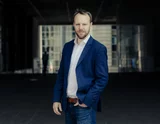
Daniel Freund
Member of the European Parliament for the Greens/EFA
Daniel Freund has been a Member of the European Parliament for the Greens/EFA since 2019. His work focuses on transparency, democracy, the fight against corruption, the rule of law and the future of Europe. He is a member of the Committee on Budgetary Control (CONT), where he serves as Greens/EFA Coordinator, and of the Committee on Constitutional Affairs (AFCO). He is also a substitute member of the Committee on Civil Liberties, Justice and Home Affairs (LIBE).
Daniel leads the Greens/EFA’s work on institutional reform, accountability and democratic safeguards. He co-negotiated the establishment of an independent EU Ethics Body and chairs the cross-party Anti-Corruption Intergroup in the European Parliament. He also works to ensure that EU funds are protected from fraud and corruption and are not misused by governments that undermine the rule of law.
Before being elected to the European Parliament, Daniel led Transparency International’s European work for five years. Throughout his career, he has worked for the German Foreign Office, the EU Delegation in Hong Kong, Deloitte and the French civil service academy ENA. He studied politics, economics and law in Leipzig, Paris and Washington, and holds a Master’s degree in Affaires Publiques from Sciences Po Paris.
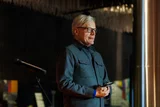
Neeme Raud
Journalist
Neeme Raud is one of Estonia’s best-known and most experienced journalists. His career has been shaped by an exceptionally broad perspective and extensive international experience. He has a remarkable ability to look beyond the day’s headlines, identify the bigger picture, and communicate complex subjects in a clear and engaging way.
He graduated cum laude from New York University with a degree in Organizational Behavior and earned a master’s degree from Columbia University in International Relations and International Journalism. His career in journalism began at the age of ten at Estonian Radio, and he has been an integral part of Estonia’s media landscape ever since. Over the years, he has worked for Estonian Radio, the Toronto-based newspaper Vaba Eestlane (Free Estonian), and Voice of America, as well as serving as a correspondent for Estonian Public Broadcasting (ERR) in both the United States and Russia.
Estonian television audiences know him, among other roles, as a former presenter of TV programmes “Aktuaalne kaamera” and “Välisilm”. Over the years, he has also hosted and produced numerous other television and radio programmes. He currently hosts TV shows “Täistund” (The Full Hour) and “Silmast silma” (Face to Face) on Kanal 2, as well as his own programme, “Neeme Raud. Siin” (Neeme Raud. Here), on Kuku Radio.
Neeme Raud’s work has received several major honours. In 2010, he was awarded the Valdo Pant Journalism Award; in 2014, he received the Order of the White Star, Fourth Class; and in 2024, he was honoured with the Golden Microphone Award.
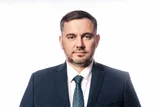
Mihail Sirkeli
Journalist, media manager, and civic activist
Mihail Sirkeli is a Moldovan journalist, media manager, and civic activist from the Gagauzia autonomous region. He is the founder and host of several talk shows on Nokta.md, an independent Russian-language online media outlet providing news and analysis for Russian-speaking audiences in Moldova, and serves as the President of the Association of Independent Press.
His work focuses on Gagauzia, Moldova’s regional politics, democratic processes, media freedom, and the impact of Russian influence and propaganda. He also hosts the political talk shows “Cost of Freedom” and “Nokta Live”.
Before dedicating himself fully to journalism, Mihail worked as an international election observer with the OSCE/ODIHR, observing 14 elections across the OSCE region. He is also a former member of Moldova’s National Council for Participation.

Péter Krekó
Director, Political Capital Institute; Research Affiliate, CEU Democracy Institute
Péter Krekó (PhD) is a behavioral scientist and disinformation expert whose research explores the psychological drivers of belief in disinformation, its political-institutional impacts, state-sponsored disinformation, and effective counterstrategies.
He holds a PhD from Eötvös Loránd University. He wrote his thesis on the psychological drivers of conspiracy theories. He is a Research Affiliate at the CEU Democracy Institute, an Engaging Central Europe Fellow at GMFUS, and a senior fellow at CEPA. He was previously a PopBack Fellow at the University of Cambridge, guest researcher at the Institute for Human Sciences in Vienna, a Fellow at IasK Kőszeg, and an Associate Fellow at Johns Hopkins SAIS Bologna.
He has also served as a Fulbright Visiting Professor at Indiana University. Krekó is the owner and director of Political Capital Institute and leads Hungary’s disinformation hub (HDMO-Lakmusz), supported by the European Commission under the European Digital Media Observatory (EDMO) at the European University Institute.
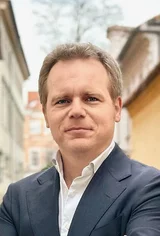
Martin Luhan
Chairman of Lobbio
Martin Luhan is the chairman of Lobbio, a Prague-based non-profit that lobbies in the public interest for transparent and democratic governance, the rule of law and various other topics. He leads several of its projects defending democratic principles and institutions.
Martin knows public service media from both sides. He worked as a reporter and presenter at Czech Radio’s culture station Vltava and as a moderator at Czech Television. He then moved to the good-governance initiative Rekonstrukce státu, where he coordinated campaigns and pushed for stable funding and independence of media as well as freedom and safety online.
Martin spent four years based in Brussels and today focuses on NGO development and EU-level lobbying alongside his work in the Czech Republic. Lobbio was among the first organisations to register in the Czech lobbyist register, and it also helps other civil society organisations with their lobbying and trains advocacy skills.